A little while ago I and my wife (known to you as the excellent “Packing and Shipping” department) vacationed in Malta and Sicily. Malta lived up to my hopes with its rich history, everything from Neolithic cave paintings to World War Two. While gazing over Grand Harbor (now Valletta Harbor, named after the heroic French knight who led the defense against the Ottomans), it was easy to see how the Knights of St. John conducted their defense against the Ottoman invasion. In the same waters, British and American sailors struggled to supply the island in the face of ferocious aerial bombardment from the Italian and German air forces. At the end of the peninsula where the Knights fought a terrible battle of attrition, astride the main gate, was a 40mm Bofors anti-aircraft gun. Near it was an information panel about the French invasion of 1798.
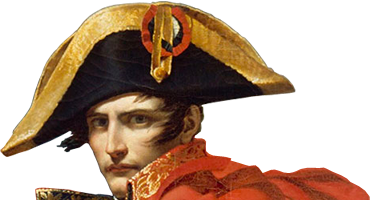
It began when a young aide-de-camp named Jean Junot landed on Malta to present a demand that the Knights surrender to his superior, 29-year-old Napoleon Bonaparte. Then and thereafter, Napoleon always cloaked his aggression with legal niceties. In this case, it was the Grand Master’s refusal to allow more than four French ships to enter Grand Harbor in order to water. Bonaparte proclaimed, “General Bonaparte will secure by force what should have been accorded to him freely.” Although the Knights felt betrayed, they recognized that little could be gained by fighting the French. So, at 2 a.m. on June 11, 1798, they reluctantly accepted Bonaparte’s terms.
Bonaparte landed on the island the next day. In the words of David Chandler, over the ensuing five days, the supremely self-confident man “tore apart and refashioned every aspect of Maltese life.” He began by abolishing the Order of St. John. Indeed, it was a woefully outdated medieval institution. Bonaparte issued a series of edicts that outlined a new constitution, created a public education system (which endures to this day), devised a new scheme for Malta’s defense, and remade its economy.
Of course this came at a price. The Order of St. John’s treasury, amassed over 500 years of fighting the Ottomans—during which they often behaved no better than pirates searching for booty—became part of the price Bonaparte extracted for his civil “improvements”; namely, some seven million francs’ worth, entered his military chest when he departed for Egypt. Many “a silver Saint [the engraved coin of the Order] went on an unexpected pilgrimage against the Infidel.”
Napoleon never set foot on Malta again. The closest he came was in September 1799, when the frigate Muiron, carrying him and his chosen staff during the exodus from Egypt, passed the southern side of Malta on its way to France.
The British recaptured Malta after a two-year siege. The Maltese people rebelled against French rule. British troops landed. Another information panel has a fine painting of the British accepting the French surrender.
On to today: I am almost finished with a commissioned book about the 1815 Battle of Ligny. I have enjoyed the work and learned new things. I will write about this in the next update.
Until then, we wish you all good things.
James R. Arnold
May 2026